
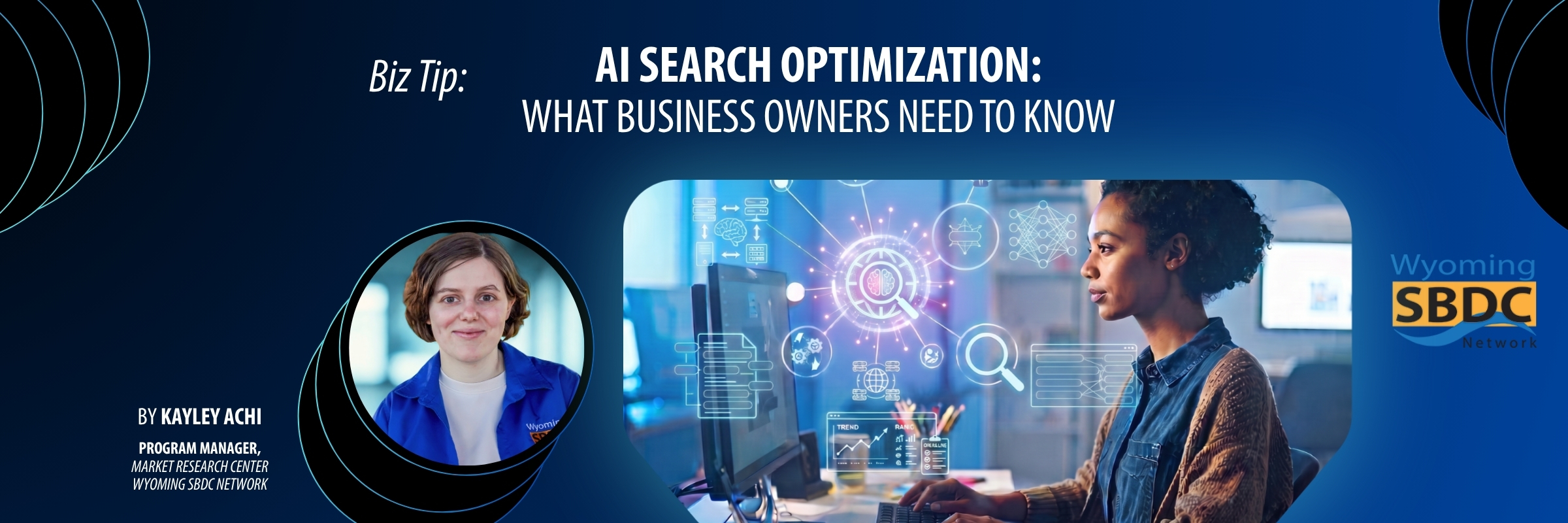
Over a billion people each month turn to AI platforms like ChatGPT and Gemini to answer questions and find local services. The shift from traditional search to AI is only accelerating with industry analysts at Semrush predicting AI search visitors will surpass traditional search visitors by 2028. Small businesses that optimize their digital content and websites for AI today will have a massive advantage in the coming years as more customers find new brands, information on local businesses, and more through these generative AI chatbots.
You might see this shift in digital content optimization called artificial intelligence optimization (AIO), generative engine optimization (GEO), or answer engine optimization (AEO). Wading through that alphabet soup of acronyms usually creates more confusion than clarity when you’re just trying to grow your business. To cut through the noise, I’ve broken down the core essentials below—what generative AI optimization means, why it matters, and how it’s different from traditional SEO.
What does artificial intelligence optimization (AIO) mean?
AI optimization is structuring your digital presence, including your website, media, and other content, to make it easier for AI systems to find and use your business information in answers. When people type in questions like “Who is the most reliable contractor in my area?” to Claude or ChatGPT, the AI model isn’t simply returning the top Google searches. Instead, they’re using their own algorithms and models to write conversational answers from a few trusted sources. The goal of optimization is for your website or other business assets to be one of those trusted cited sources.
Why does AIO matter for small businesses?
According to a survey by the Pew Research Center, almost half of all U.S. adults (49%) are using AI chatbots like ChatGPT, Gemini, Copilot, and Perplexity. The primary use for four in ten adults was to search for information, so more of your potential customers are using these generative AI chatbots as search engines where they may ask for recommendations and make buying decisions.
At the same time, traditional search engine results are losing ground. A study by Ahrefs revealed that Google’s AI Overviews have already driven a 58% drop in organic click-through rates for top-ranking search positions. In short, your potential customers are bypassing website links altogether—either by switching to standalone chatbots or getting their answers directly from Google’s instant AI summaries.
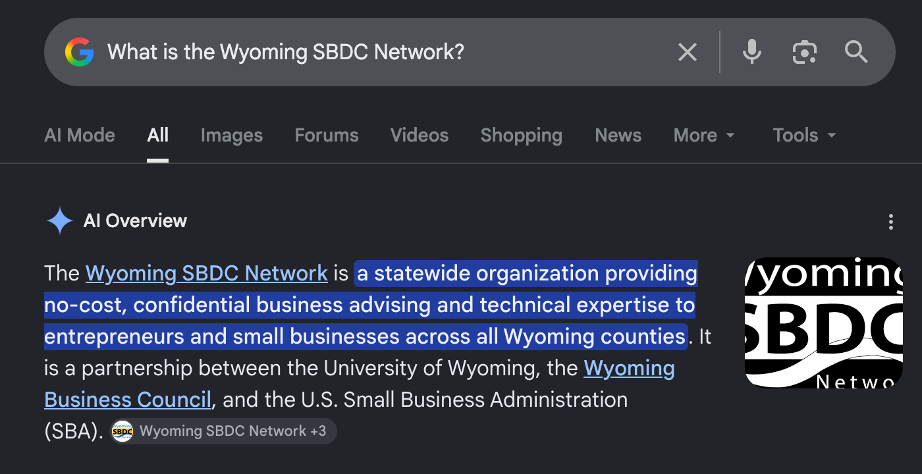
For entrepreneurs, AIO is an opportunity to reach the nearly half of Americans using chatbots and to get ahead of competitors who may be lagging on updating their digital presence to increase their AI visibility.
SEO vs AIO
Search engine optimization (SEO) focuses on increasing your website’s ranking in traditional search results. When someone types in a question or query like “What’s the best pizza restaurant near me?” or “car repair tips”, Google scans hundreds of thousands of webpages to find the most relevant websites and webpages to answer the query.
The goal of SEO is to earn a spot on the first page of search results for the keywords and queries most relevant to your business, like the website for your dog grooming company taking the second slot for a search for “dog groomers in Laramie”. A good SEO strategy tends to lead directly to more website visitors. AIO works differently. AIO may not lead to more clicks or website visitors but an increase in your business’s overall visibility.
Many of the factors search engines like Google use to rank your website are similar to how AI models evaluate their sources. Both want to ensure the answers they provide are relevant to the query. Basically, does your webpage answer the specific question or relate to the topic posed by the user? AI and search engines also want the content to demonstrate trustworthiness, authority, and expertise.
I used the term “trusted source” earlier because it really is the foundation of everything. Whether you’re talking about traditional or AI search, every major model and algorithm is built around finding sources that are high-quality. The key difference is how they measure what is high-quality, trustworthy, and relevant.
Search engines tend to rely more on your website’s keyword placement, backlinks, and site structure. The AI systems often look at the totality of your digital footprint by scouring not only your website but review sites like Reddit, directories, and website mentions that verify your business is worth citing.
How do I get started with AIO?
Every AI platform relies on its own unique algorithm to pick sources, so visibility across chatbots isn’t uniform. A user might get your business as a top recommendation on ChatGPT but see an entirely different set of competitors on Claude or Perplexity for the exact same prompt. Semrush confirmed this difference by analyzing AI citations across platforms, and the results showed little overlap between the sources recommended by Google compared to ChatGPT and even Google’s own AI mode.
Given how rapidly these algorithms evolve and how many models people use, there’s no “magic formula” that guarantees your small business will appear in every AI response. However, focusing on core trust factors will steadily boost your visibility across multiple platforms. To dive deeper into actionable tactics, I recommend starting with Semrush’s “How to optimize for AI search results in 2026”.
The Wyoming Market Research Center also offers no-cost website analysis reports to small businesses in Wyoming. Our research team can audit your website and give customized, actionable feedback on how to improve your SEO, AIO, and website user experience. If you’re interested in receiving a free website analysis report, connect with your Wyoming SBDC Network Regional Director.

_______
The Wyoming SBDC Network is hosted by the University of Wyoming with state funds from the Wyoming Business Council. Funded in part through a Cooperative Agreement with the U.S. Small Business Administration. Full funding disclosures available at
wyomingsbdc.org/about
All opinions, conclusions, and/or recommendations expressed herein are those of the author(s) and do not necessarily reflect the views of the SBA.